

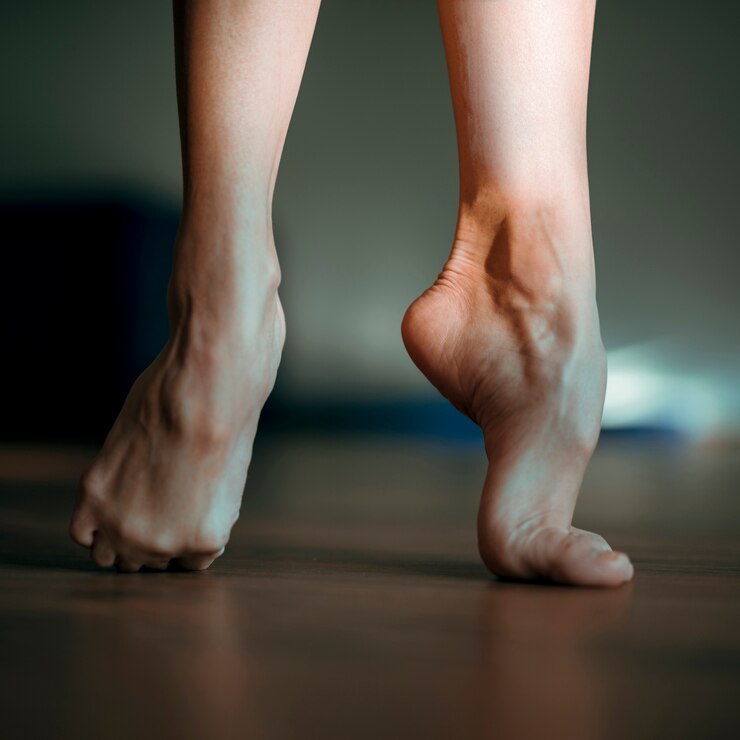
Why you should have your Achilles rupture repaired
Operative versus nonoperative treatment of acute Achilles tendon ruptures: a multicenter randomized trial using accelerated functional rehabilitation. Willits K, Amendola A, Bryant D, Mohtadi NG, Giffin JR, Fowler P, Kean CO, Kirkley A.
Operative versus nonoperative treatment of acute Achilles tendon ruptures: a multicenter randomized trial using accelerated functional rehabilitation. J Bone Joint Surg Am. 2010 Dec 1;92(17):2767-75. doi: 10.2106/JBJS.I.01401. Epub 2010 Oct 29. PMID: 21037028. Willits et al performed an RCT comparing non-operative to operative treatment for patients suffering acute Achilles tendon ruptures (P), a condition I specialize in. 1 Historically, non-operative treatment of this condition has a higher incidence of re- rupture (O), a somewhat catastrophic condition at least psychologically, and financially for athletes. The authors sought to compare using a similar post-injury protocol (accelerated functional rehabilitation), with the intervention being repair of the ruptured tendon (I) vs no surgery(C).
The authors calculated they needed 77 patients in each study arm to achieve power =.80, based on prior meta-analyses showing a difference of re-rupture for operative repair (2.5%) vs non-operative treatment (13%), needing to be at least 11%, with one sided Type- one error of 5%. Their flow diagram showed 72 patients in each arm at the end of the study, with no cross-overs included, as there were two in operative group and three in the non-op group that sustained re-ruptures. Four went on to revision via surgical repair but the authors did not say from which group.
Randomization was computer generated and stratified by one surgeon. This could induce some selection bias by only having one surgeon (as there may be a preference to intervention). Because patients who had surgery would have a scar, this could induce performance bias, both positively and negatively (surgical patients could think “I had surgery so it will be fine” and not do their rehab). Generalizability is limited to patients in the Canadian national health system as expectations and willingness to pay for additional treatment such as physical therapy may be limited. There may also be financial bias in keeping the treatment of certain conditions, to be low-cost in this type of health system. There was sampling bias as the study only included English-speaking patients.
There were findings that stood out to me which the authors could have emphasized, beyond their conclusion of showing “no difference” between the two treatment arms. Return to sports is predicated on the ability to heel raise/ strength. 1,2 Of all the parameters they accessed, the only significant difference was that operatively treated ruptures had better plantarflexion strength which is the mechanism of how one heel raises, an important predictor of return to sport, (95% CI, 0.07 to 0.40, P=.03). 1,2 Another item they did not point out but apparent from Table II is that 89% of the operatively treated patients return to sports whereas 82% of the non-op patients did. Their Figures 3A-B did show outcomes from prior meta-analyses with low heterogeneity, so they did construct their study to fit with those previously performed, which also showed no differences. Unfortunately, none of the studies used a reproducible patient reported outcome (PRO).
The main concern with operative treatment is wound issues and these authors did not compare percutaneous techniques, which have significantly less complications. 1,3 Other RCTs have shown this to be the case. 3 Perhaps a three-arm RCT study on open vs percutaneous repair, and non-operative treatment, using the same protocol will be conducted.
1. Saxena A, Maffulli N, Jin A, Isa E, Arthur WP, Asthana S. Acute Achilles Tendon Rupture Repair in Athletically Active Patients: Results on 188 Tendons. J Foot Ankle Surg. 2021 Sep Oct;60(5):935-940. doi: 10.1053/j.jfas.2021.01.009. Epub 2021 Mar 31. PMID: 33947591.
2. Saxena A, Ewen B, Maffulli N. Rehabilitation of the operated achilles tendon: parameters for predicting return to activity. J Foot Ankle Surg. 2011 Jan- Feb;50(1):37-40. doi: 10.1053/j.jfas.2010.10.008. Epub 2010 Nov 24. PMID: 21106412.
3. Maffulli N, Gougoulias N, Maffulli GD, Oliva F, Migliorini F. Slowed-Down Rehabilitation Following Percutaneous Repair of Achilles Tendon Rupture. Foot Ankle Int. 2021 Sep 28:10711007211038594. doi: 10.1177/10711007211038594. Epub ahead of print. PMID: 34581220.
Title: Surgical Treatment Versus Conservative Management for Acute Achilles Tendon Rupture: A Systematic Review and Meta-Analysis of Randomized Controlled Trials. Reference: Deng S, Sun Z, Zhang C, Chen G, Li J. Surgical Treatment Versus Conservative Management for Acute Achilles Tendon Rupture: A Systematic Review and Meta-Analysis of Randomized Controlled Trials. J Foot Ankle Surg. 2017 Nov-Dec;56(6):1236-1243. doi: 10.1053/j.jfas.2017.05.036. PMID: 29079238.
Why I chose this article: I previously published the largest series of Acute Achilles tendon repairs by a single surgeon (188), as well as a systematic review of post-op protocols. 1 There has been some controversy whether surgery is needed for acute Achilles tendon ruptures and if repair is “better”. A meta-analysis was conducted to elucidate if surgery is “better”. The authors conducted a meta-analysis on eight RCTs evaluating a total of 762 acute Achilles tendon ruptures (P), evaluating 381 with surgical repair (I) vs 377 with non-surgical treatment (C ), (does not add up to 762!) for complications ( O) such as re-rupture, which was significantly lower with surgery, 3.7 % vs 9.8%, (RR 0.38, 95% CI 0.21 to 0.68, P<.0001), and not significantly different as to blood clots, percent returning to sport, ankle range-of- motion, Achilles Tendon Rupture Score and physical activity. Interestingly, the biggest concern with surgery is wound healing, 2 which these authors did not summarize in their meta-analysis. (FYI, the re-rupture rate in my study was 1.6%, wound complications were 5.6% and 65.5% return to their desired activity/sports; at best, 70% of pro athletes return to their sport.) 1
1. The authors showed their flow chart for article retrieval which followed the PRISMA guidelines.
2. They used registries including Cochrane and inclusion/exclusion criteria, including only RCTs.
3. They used two independent reviewers to collect the articles who were un- blinded. This can be selection bias. Publication and Reporting bias may be an issue and common with meta-analyses. Since the authors are from a country (China) with socialized medicine where surgery is a perceived cost, publishing an article in support of non-surgical treatment would be in their interest.
4. They looked at pooled data and evaluated dichotomous variables (such as re- rupture or not). There did not appear to be sensitivity nor sub-group analyses.
5. They tested for heterogeneity, using I² of > 50%
6. The Box plot for re-rupture favored surgery
7. They met Hill Criteria including biological plausibility, Strength of Association (<0.5), Experiment (since all were RCTs), and AEs were not due to Chance nor Effect-cause.
References:
1. Saxena A, Maffulli N, Jin A, Isa E, Arthur WP, Asthana S. Acute Achilles Tendon Rupture Repair in Athletically Active Patients: Results on 188 Tendons. J Foot Ankle Surg. 2021 Sep-Oct;60(5):935-940. doi: 10.1053/j.jfas.2021.01.009. Epub 2021 Mar 31. PMID: 33947591.
2. Willits K, Amendola A, Bryant D, Mohtadi NG, Giffin JR, Fowler P, Kean CO, Kirkley A. Operative versus nonoperative treatment of acute Achilles tendon ruptures: a multicenter randomized trial using accelerated functional rehabilitation. J Bone Joint Surg Am. 2010 Dec 1;92(17):2767-75. doi: 10.2106/JBJS.I.01401. Epub 2010 Oct 29. PMID: 21037028.